We are on the doorstep of 2021. What will the year have in store for us? We are all optimistic that it will be a good year with the vaccine proving to be successful. Let’s hope for the best.
It’s equally important to look back at 2020 and see how the year was both personally and professionally. While now we are living through this and experiencing it, after some years, there will be a new generation who might not be aware of the painful and turbulent situation we faced and struggle to overcome.
Jan – I recall returning from my Christmas vacations. Fresh from visiting family and friends, and very enthusiastic about the new year. However, rumblings were already there about the mysterious Wuhan virus. In fact, I had this thought in the back of my mind, that it might already be there in UAE. Because UAE is so strongly positioned as a global hub, and millions of Chinese either visit or transit Dubai every year. Started work as usual.
Feb – We started getting reports about the virus spreading in Wuhan and some other provinces in China, like wild fire, without any control. We started seeing videos of people falling/lying dead on streets and an entire city being blockaded. Even food was being supplied and none could go out. Conspiracy theories were fuelled by lack of information in general about the virus. We started worrying about the impact on travel, since slowly countries started shutting down their borders. I recall Singapore getting infections during this time, but managing well. It gave some hope to small countries like UAE that this might be controllable. But we started hearing about Italy becoming infected badly.
Mar-June: This was the most dismal and upsetting time period I have gone through in quite some time. In March, Dubai closed its borders. Other emirates followed through shortly after. So, we were cut off from the rest of the world, and they were cut off from us. Some of my friends were stranded in Kerala, where they had to stay for almost three months before they could come back. All flydubai aircrafts were grounded. No revenue was coming in initially, but then cargo business started booming. Because countries need produce from other countries, or to other markets. So we deployed lot of our aircrafts on cargo runs, but while it helped the overall cause, there was lot of concern about the industry and our jobs.
Luckily, flydubai is a compact organisation, and led by a group of very positive thinking leaders, with the best brains. Our CEO was especially firm that all of us should be together during this time, and we should take care of our staff. He fully understood that situation would improve in some months, and then we would need the entire work force to work more productively. So, we didn’t have any layoffs, thank God. Though some of the cockpit/cabin crew were asked to go on leave. Mostly because the aircrafts were on the ground. Bigger airlines had to layoff more than 10 percent of their work force.
We did take a lot of firm steps to reduce costs. All onsite contractors from my team were deployed back offshore. All of them were let go for almost two months, till the situation improved a bit. Our permanent work force focused on keeping the lights on. We worked out favourable rates and payment plans with our vendors, and in some cases, cancelled entire contracts and decided to build those systems inhouse. This would help us save millions annually. So, the thinking was not at all short term or led by panic. It was strategic, and aimed at recovery of business at the fastest possible pace. The partner vendors were also very supportive, in fact, they were also thankful that business was ticking even though it was desperate times. So very proud that we were able to withstand the storm without too much damage, thanks to the confidence and strength of our top management, led by the CEO.
From March mid onwards, we started working on key initiatives with our inhouse team and bare minimum external support.
By May end/June, countries started offering bubble agreements which were bilateral point-point to take citizens and residents back to their country of residence. So people who were stranded could start coming back. People started saluting the frontline staff who were facing the threat of the virus every second. Some of my friends also got infected, but recovered by the Grace of God. Countries like UK, India and US started getting infected, and the number game changed rapidly. There was always a concern that the numbers being reported are not accurate, and even otherwise there were many more who didn’t even go to the clinic or report symptoms.
We had started working from home in March, and since then we have been maintaining that. Our new offices are being constructed, and hence we would go there once ready. It helps us also, because productivity really jumped through WFH. We delivered almost double the number of projects than our usual bandwidth. We also developed inhouse capabilities on Robotic Automation which helped us replace several manual processes.
Many people started losing their jobs during this time, as businesses started suffering. We all started helping out by purchasing tickets and in other ways. I even organised a fund from school alumni, and got in touch with a famous Radio DJ. So that he could announce over the air waves and find people who need help. He asked me to keep the money with me, and he would let me know when someone desperately needed it. Till date, he hasn’t reached out. I think it’s because so many people are contributing and helping out, that he’s not even able to get past those lines. I ended up contributing some money from that, to purchasing TVs back home for students who had online classes telecasted live through channels.
July-Oct: I would call this the recovery period after the deep slumber. We started operating some flights and people also started travelling. A lot of expatriates from UAE were returned to their countries of origin and vice versa. The feedback from top management gave us confidence and comfort and the strength to work well for the organisation. When the organisation takes care of it’s employees, loyalty is a strength that can overcome the hardest obstacles.
We were very cost conscious during this time, and cut down on all unwanted spend. This helped in personal life as well, I feel. There was very little to spend on. Most of my spend was on gardening stuff and this is when my garden started coming up. I also started spending more time on photography.
News of Moderna/Pfizer/Astra Zeneca Oxford vaccines also started making the rounds. People were anxiously waiting for the vaccine.
On a personal note, I facilitated the charter of three full flights for a friend who was representing an Indian social organisation here. My bit during this time.
Nov-Dec: This is the time when business started picking up. Dubai had opened up fully, and even some trial vaccines were available. Even team mates started travelling. I started going out regularly, but was careful to have masks and even gloves on. I noticed that most people do not use gloves. I am not sure why. It’s better to use them and clean hands with soap one time, than always clean hands with sanitizer which really is bad for skin. Of course, this is my opinion.
We were working on budgets during this time, and finalised 2021 budgets. The outlook is positive, and while we have little control over the events happening now, we believe travel will return to normal.
Three vaccines were also undergoing Stage 3 trials, and results came out. These vaccines provide around 95% efficiency in resisting Covid, and vaccinations started as well in various parts of the world. What is still not clear is whether vaccines will also help stop spread of the vaccine, how long will the resistance last, and whether there will be any side effects of the vaccine. Since everything about this virus is new, even treatment is new, and impacts are not fully known. There are also two variants that have appeared in UK and South Africa, and spreading rapidly. It is not known if these can be addressed by the vaccine. So lot of unknowns. Russia and China have also come out with vaccines though a lot of information is not available regarding their efficiency.
Travelling in planes is supposed to be very safe even from a virus infection perspective. IATA regularly advertises this message, and now airlines are coming together for a vaccination passport. Contactless payments, contactless travel are all offshoots of the situation we are in.
Normally during December I would be taking my leaves and going to India and one other place with family every year. There is also the usual religious pilgrimage that would happen annually to fulfill the spiritual debt. None of that happened this year sadly. I hope this is an exception and next year would be back to routine.
These were also the months when my daughter started taking an active interest in cooking. Cakes, brownies, pies, pizzas, rolls, cookies all started coming out of the OTG and I was able to keep my taste buds satisfied.
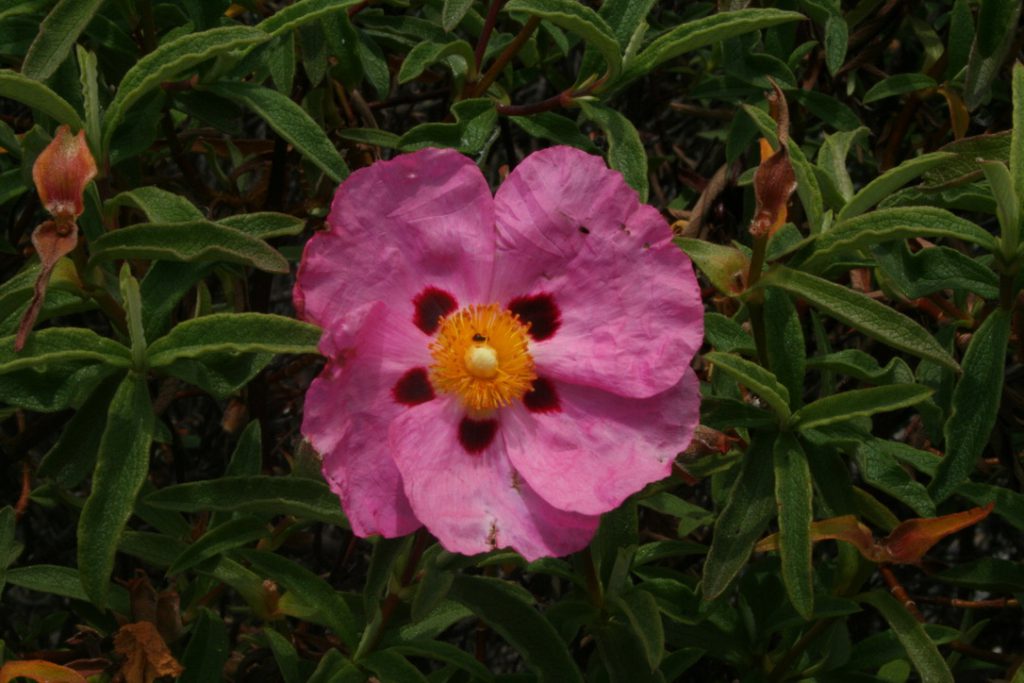
My garden also started blooming with lot of flowers, and fruits appearing. It really gave me an outlet for my weekend energy release, and also helped me learn something I always wanted to experiment with. Most of the plants I grew from seeds, and it was a great learning experience.
I would like to look at the stage we are in, as the curve rising towards recovery, with the flat line well beyond. If so, the world has the opportunity to be back to normal in a few years time. If not, we are in for further struggle and the best scientific minds will again have to help mankind.
I really would like to thank all my friends, family and business acquaintances who helped me sustain my spirits and direction through this period of crisis, and helped run the business as well with minimal impact. While we are still not out of the woods, we can see the lights and the sights, and I am confident 2021 will be a better year. We all have to do our bit as well, towards the COVID situation, by following all precautions and staying healthy and safe. God Bless Us.
Before I end, I just wanted to list down some positives that I feel have come out of this COVID phase that humanity is facing
- Health awareness: Everyone became more health conscious, governments learnt how good their health care infrastructure is, everyone took steps to improve
- Minimalism: Everyone became aware of insecurity of jobs, most got pay cuts and started spending less. As a result, savings increased and we all learnt we can live with lower salaries as well.
- Self-sufficiency: Many people lost their jobs, and whether here or back home, started independent ventures. Made us think in a different direction away from our comfort zone
- Charity: We became hugely aware of how lucky we are to be safe, and even to be earning. Maybe unconsciously, our responsibilities towards others increased, and we started helping out more
- Family bonding: Staying close together can result in both strengthening as well as weakening relationships. However in general, bonding time increased and families are more tightly knit now than before
- Hobbies: Since we got more time to ourselves, we found things to do which we never could do before. Everyone became a cook, many became gardeners. I was able to spend lot of time on both gardening and photography
- Ego and Vanity: We lost both these to a small microscopic virus. We were pushed back rudely to our places, and given a preview of how important we are in this universe!
- Online time: I wasn’t even looking at facebook or what’s app much, before the lock down. However the screen time and online time increased naturally because I had more time to spend, and also because I was worried about friends in various parts of the world
- Spirituality: I believe people started praying more. The so called “Gods in our midst” had a rude shock because none of the so called shenanigans could work against the virus. People moved away from superstitions, towards Science
- Responsibility: Responsibility increased and contributions also increased towards household and other chores. We all learnt to support each other and help out at home. Overall responsibility towards ourselves and others increased.